Author Archive

A New Challenge: 50 Movies in 2005

Thursday, March 10th, 2005

I have taken on a 50-book challenge for the year, and have just decided that, although it’s the middle of March, I’m going to give myself a 50 movie challenge as well. I got off to a slow start, but am catching up fast. I need to pace myself, though, so I don’t burn out by going famine to feast! One to two movies a week doesn’t sound unreasonable. Feel free to join me by watching movies, then writing about them on your weblog.

In Good Company 1. In Good Company. 2004. Directed by Paul Weitz. A quiet, steady little film, surprising in its avoidance of several cliches that seemed inevitable. Strong performances by Topher Grace, Dennis Quaid and the ubiquitous Scarlett Johansson.
Million Dollar Baby 2. Million Dollar Baby. 2004. Directed by Clint Eastwood. Solid movie that ended up not being a sports flick after all. It nicely avoided some cliches, but had a few dodgy bits, like Maggie’s too awful family and a bit at the end that I won’t mention for those of you who haven’t seen it yet. The music really bothered me. I found it sentimental and intrusive. Excuse me, Clint, but can’t you be satisfied with directing and acting?
Long Goodbye 3. The Long Goodbye. 1973. Directed by Robert Altman. Elliott Gould as Phillip Marlowe. A performance Adam Brody should be aspiring to–a cool, grownup smartass. Features a hilarious bit in which Marlowe, being carried off by somebody, yells that he’s going to contact Ronald Reagan, then the governor of California. A few scenes later, who should appear, in an uncredited part sporting a sleazy mustache, but the current governor of California? Weird. Funny.
On the Waterfront 4. On the Waterfront. 1954. Directed by Elia Kazan. Brando is stunning, and it was a kick to finally hear “I coulda been a contender!” in context. The movie can be read as an extended apologia for Kazan and others like him who named names during the McCarthy hearings. But there’s a difference between a whistle blower and somebody who points the finger during a witch hunt; unsurprisingly, the film doesn’t draw this distinction.

For those of you in the Twin Cities, the Oak Street Cinema is celebrating its tenth anniversary this year, and has some fabulous films on the schedule, including some that I haven’t seen from the Centenary Cinema List I mentioned earlier, like The Rules of the Game, Breathless, and Ugetsu.
50 Book Challenge, Books 6 through 12

Wednesday, March 9th, 2005

Persepolis 6: Persepolis by Marjane Satrapi. A graphic novel memoir of a childhood in 1980s Iran. The iconic black and white art effectively conveys a girl’s-eye view. By turns funny, thoughtful and tragic. For more information, see this Bookslut interview with the author.
Best American Nonrequired Reading 2002 7: The Best American Non-required Reading 2002 edited by Michael Cart and Dave Eggers. A high-caliber collection containing both fiction and non-. I enjoyed a high percentage of the entries, uncommon in a collection, particularly “Stop that Girl” by Elizabeth McKenzie, now part of her recently published novel of the same title, which was reviewed here at Conversational Reading. CR also did a review of a review of STG.
Doing It 8: Doing It by Melvin Burgess. An English boy coming-of-age novel and the basis for the likely-to-be-cancelled series life as we know it. Funny, likeable characters with distinct voices who are realistically yearning for and agonizing over sex.
Rush Hour: Sin 9. Rush Hour Volume 1: Sin edited by Michael Cart. Again, a very strong collection. I was mesmerized by Terry Davis’ “The Silk Ball,” which interwove Cambodian theology with a tale of modern military violence.
Rush Hour: Bad Boys 10: Rush Hour Volume 2: Bad Boys edited by Michael Cart. I went to see Michael Cart at a conference, which is why he is well-represented here. Yet again, a strong collection. I found “Joaquin Years” by Edward Averett haunting, and was intrigued by Robert Lipsyte’s essay on jock culture.
Girl 11: Girl by Blake Nelson. A coming-of-age novel that was published to an adult market in the mid 90s but featured a high-school senior protagonist. I skipped this book when I saw it the first time, but picked it up after reading a recommendation at Avenging Sybil, a blog that focuses on sexual themes in YA literature. Girl is somewhat dated, but engaging, and Nelson (who is male) writes a believable girl narrator in Andrea. I found the characters emotionally thin, especially Andrea; I don’t know if this was deliberate. Parts of Girl were previously published in the late, lamented Sassy magazine, including the very strong chapters in which Andrea works at a summer camp.
Earth, My Butt... 12: The Earth, My Butt, and Other Big Round Things by Carolyn Mackler, which I previously wrote about here.

More favorite fictional characters

Tuesday, March 8th, 2005

Our 18-month-old son Drake is not immune to bookish delights. Here are some of his current favorites.
Daisy Olivia Frances Rosie Goldilocks

Mmm….

Monday, March 7th, 2005

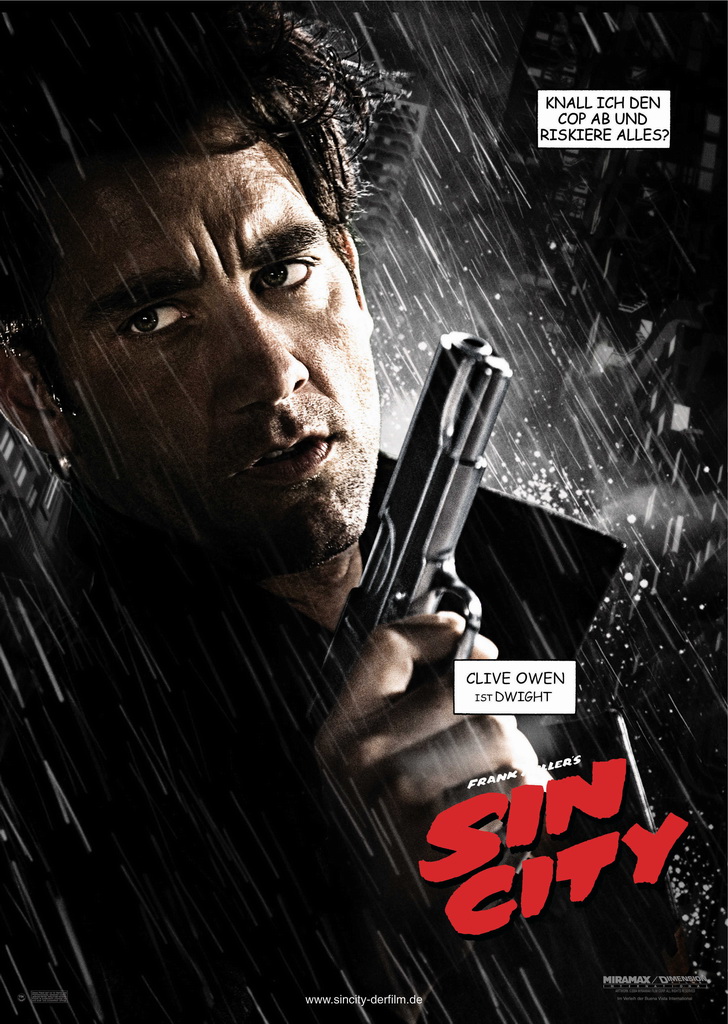
Clive
Clive in black leather.

“I question your commitment to the cause”

Monday, March 7th, 2005

This is what my friend the Big Brain joked once when I admitted that it had been a while since I’d seen a movie. Years later, I now know what a true movie dry spell looks like.

I had a hard realization two weeks ago when I looked at the Oscar ballot. I had seen none of the films that were nominated in the big categories. In fact, I’d only seen two that were nominated for anything at all: Spider-Man 2 and Harry Potter and the Prisoner of Azkaban. They were good, entertaining movies, but still.

I used to consider myself a film buff. My husband G. Grod and I own two movie guides, the VideohoundVideohound’s Golden Movie Retriever and the much better, though less comprehensive Time Out Film GuideTime Out Film Guide. Tellingly, it has been at least two years since we’ve replaced our copies. During the opening montages on Oscar night, I recognize most of the clips. For several years, I read the British film magazine Sight and Sound. I watch Ebert and Roeper At the Movies every week, even if I don’t go see the films they talk about. After our son was born, though, everything changed. We had the same three Netflix movies for three months. We finally returned them, unwatched, and cancelled that service.

I know what the issues are. My husband and I don’t have a baby sitter, and aren’t looking too hard for one while he’s unemployed. By the time we put our son Drake to sleep, we’re often so tired that it requires herculean effort to do anything more than collapse in front of our Tivo. We watch a lot of television, which doesn’t leave much room around the edges for movies. Too often we’re not in the mood for something dark, or that’s over two hours.

It’s time for this to change; I don’t like that I watch more television than I do movies. Step one is to watch less television. I’ve already cut out three hours a week: Simpsons, Scrubs, House and Joan of Arcadia. They stopped being worth my time. Step two is for my husband and I to trade childcare, so that one of us watches our toddler Drake while the other goes out to see a movie. I prefer to see movies with someone rather than by myself, but I’d rather see a movie by myself than not see it at all. Eventually, we will get a babysitter. But until then, there are still ways to see a movie. We just have to work a little harder at it than we have been for the last eighteen months. Movies (or, at least, good movies) are worth it, so we will.

My favorite top 100 movie list is ten years old, but I think it has aged well. Interestingly, I don’t think that this year’s Oscar winner for Best Movie, Million Dollar Baby, would make the list if it were compiled today. I thought MDB was good, but not great. Was there another movie, American or not, made last year that was great, and would be included in a top 100 list? I’m not sure, because I didn’t go to the movies last year. I plan not to be so ill-informed next year.

Favorite fictional characters

Thursday, March 3rd, 2005

The Independent asked 100 British literati to name their favorite fictional characters. (Link from Bookslut.) Jane Austen’s heroines did very well. I also smiled to see two of my childhood favorites, Anne of Green Gables and Enid Blyton’s George.

If I had to pick one favorite fictional character, though, it wouldn’t be a female. It’s Billy Prior, from Pat Barker’s trilogy that included Regeneration, The Eye in the Door, and The Ghost Road.

What fictional character means the most to you?

More Good Fiction with Religious Themes,

Thursday, March 3rd, 2005

Please note that the phrase in the title refers to a very different thing than “religious fiction”.

After I posted yesterday’s entry, I thought of a few more works of fiction about religion that I recommend:

SparrowThe Sparrow by Mary Doria Russell
God of Small ThingsThe God of Small Things by Arundhati Roy
Poisonwood BibleThe Poisonwood Bible by Barbara Kingsolver
Bee SeasonBee Season by Myla Goldberg (the far superior Bee book, in my opinion, to the one I mentioned in yesterday’s post.)
Original SinsOriginal Sins by Jamie Delano
Season of MistsThe Sandman Vol. 4: Season of Mists by Neil Gaiman
Golden CompassThe Golden Compass by Phillip Pullman
Wind in the DoorA Wind in the Door by Madeleine L’Engle
Angels & InsectsAngels and Insects by A.S. Byatt

Recommended to me but not yet read are books 2 and 3 in the Pullman trilogy, and Towing Jehovah and Only Begotten Daughter, both by James Morrow.

I am having a hard time coming up with movies that include religious themes that I think are well done. “Angels and Insects” was good but not great, and “Possession” was able to be a decent adaptation of a complicated book because it deleted most of the book’s religious themes.

Anyone? Anyone? Bueller?

Super Grover

Wednesday, March 2nd, 2005

Super Grover An Alex Ross illustration of Super Grover.

Courtesy of The Beat’s coverage of Toy Fair.

Better Reviews Through Religion!

Wednesday, March 2nd, 2005

I like coming up with theories. The good thing about them is that I feel no obligation to scientifically test them. The bad thing is that I occasionally get egg on my face if I expound on one of them to someone learned enough to call my bluff. One of my current theories is that some books and movies with religious themes are better reviewed or liked than their overall quality deserves because while many people have quit institutional religion, they still crave religious engagement of some sort.

The most famous current example is Dan Brown’s The DaVinci Code, a hugely popular best seller, but widely acknowledged to be poorly written and sensational. Other books that I think fall into this category are The Secret Life of Bees by Sue Monk Kidd, and Life of Pi by Yann Martel, both of which I thought held little merit other than perhaps some religious ideas that might be interesting to those who didn’t know about cults of Mary (Bees) or how many similarities there are in different religious traditions (Pi). I had to strenuously avoid The Red Tent a few years back; many women recommended it and tried to lend it to me. I was constantly told, “The writing’s not good, but the ideas are.” Thanks, but I avoid bad writing if I can.

I was reminded of this theory most recently after reading a few glowing reviews of the movie “Constantine”. And they weren’t by blurb hacks, either, they were at The Flick Filosopher and BOTH the Minneapolis Star Tribune and the St. Paul Pioneer Press. Thank goodness the City Pages panned it or I would’ve thought something seriously strange was going on. I’m not going to see “Constantine” because I’m certain that it’s bad. My guess is that the good reviews are a result of some people’s hunger for religious stimulation.

I found it interesting that Roger Ebert dismissed “Constantine” as merely silly. I suspect that Ebert, who often discloses his Catholic background and its influence on how he views certain movies, is actually pretty sorted vis a vis his religious views.

In the interest of similar disclosure, I think I’m immune to the pull of works like these because I’ve spent a lot of time studying religion. I minored in religious studies as an undergrad and went on to get a master’s degree in it. I don’t think it’s impossible to write well about religion or religious history. I just think that one needs to write well to do so.

Here are a few books that I feel pull that off.

A Letter of MaryA Letter of Mary by Laurie R. King
PossessionPossession by A.S. Byatt
The End of the AffairThe End of the Affair by Graham Greene
A Prayer for Owen MeanyA Prayer for Owen Meany by John Irving
Chronicles of NarniaThe Chronicles of Narnia by C.S. Lewis
Princess and the GoblinThe Princess and the Goblin by George MacDonald

What do you think of this theory? Am I full of it? What other books or movies do you feel are provocative about religion AND well done? Or what other examples come to mind of bad books and movies that were inexplicably well reviewed? I’d love for this entry to spur a heated discussion, even if I end up with the aforementioned egg on my face.

Battlestar Galactica, Season 2

Wednesday, March 2nd, 2005

Thanks to Blogenheimer for letting me know that Battlestar Galactica has been renewed; the second season will run this summer.

Battlestar “has been averaging over 3 million viewers per episode and has quickly become SCI FI’s highest-rated original series and has received unprecedented critical acclaim.”

Details are here.

All Together, Now?

Tuesday, March 1st, 2005

I’m wondering if perhaps it’s time to make a shift in my television-viewing and comic-reading habits. Rather than indulging episodically, I’d wait for collections, on DVD of the former and in GN (graphic novel) of the latter. I could consume at my leisure. I’d be better assured of overall quality, since well-reviewed and received shows/books have a better chance to be collected. I’d avoid the aggravating and distracting ads. Plus, the ending is right there, whenever I get to it.

One downside is that a good show or book might get cancelled for lack of support if everybody did that. Yet plenty of good books and shows have gotten cancelled even when I did watch them, which only made me more sad when they left me at odds and ends. Often, things get cancelled because they deserve it. Waiting for collections would mean I’d never waste time gambling on duds.

The more serious downside I see is the delay until a collection appears. If a series has a lot of surprises, this leaves more room for spoilage. But the time till collection is getting shorter both for DVDs and GNs, so the benefits are sounding better all the time.

A Few Things about Veronica Mars

Tuesday, March 1st, 2005

1. Veronica Mars is currently my favorite show on television. What can I say? I have a soft spot for girl detectives.

2. Its creator, Rob Thomas, was also a writer and producer on the 1998 show Cupid, which starred Jeremy Piven as a guy convinced he was the human incarnation of the love god. Cupid got a swift axe from ABC. It was funny in spite of Piven’s often-annoying co-star Paula Marshall. Thomas has said that had the show continued, it would have neither confirmed nor denied whether Piven’s character was Cupid.

3. Thomas has also written several teen-fiction novels. I recently read Rats Saw God, which I highly recommend. Rats Saw God

4. Veronica’s dad is played by Enrico Colantoni, who also played Mathesar in the movie Galaxy Quest. Galaxy Quest.

5. The school’s bad boy is Eli “Weevil” Navarro, played by Francis Capra, the great-grandson of the famous film director.

6. The theme song “We Used to be Friends” is by the Dandy Warhols, from their album Welcome to the Monkey House. Welcome to the Monky House

7. Veronica Mars is on UPN Tuesdays, 9 p.m. Eastern, 8 p.m. Central. The next episode airs Tuesday, March 8.

Musings, not mommyfestos

Monday, February 28th, 2005

Lisa Schmeiser of The Rage Diaries, on how to deal with the recent glut of mommy-related media:

Consider it the editorial form of non-violent protest — non-attention protest. Ignore these spurious mommyfestos. Acknowledging them only gives them what they want, most likely at your expense.

So no mommyfestos from me. Instead, two of the things I’m wrestling with today.

One, how to celebrate the fact that my child is a unique individual, while also acknowledging, to myself and to him, that he’s just like everybody else. The former without the latter means a skewed sense of oneself in relation to the world, like Zaphod Beeblebrox and the fairy cake, from Douglas Adams’ The Hitchhiker’s Guide to the Universe.

Two, how to hold the difficulties lightly and free myself to enjoy parenthood. When my husband and I moved to Minnesota, some of the first advice we got was, “Learn to like winter. Don’t hide inside, or you’ll hate it here.” Those words have stood us well for the nearly seven years we’ve lived here. Now I just need to figure out how to do the same thing with being a mom.

Both things are simple, but neither is easy.

The Snowy Day

Sunday, February 27th, 2005

As is our morning habit, my eighteen-month-old son Drake and I went out Friday to the coffee shop then the park. We walked in snow that was astonishingly lovely. It fell as dry, discrete flakes. I managed to catch a few perfectly formed, six-pronged crystals on my sleeve. Their descent was slow and steady, dampening the noise of the nearby traffic. I paused often, to stare both at the snow and at Drake, who ran purposefully ahead in his fuzzy snowsuit with its pointed hood. He’d stop occasionally to look back, curious why I wasn’t keeping pace with him.

The quiet snowfall reminded me of a scene from Japanese director Hayao Miyazaki’s animated film “Nausicaa of the Valley of the Wind”, released in the U.S. this week on DVD. The pronunciation has been Americanized on the television commercials I’ve seen as “NOZ ih kuh”, but I believe it is more correct as “Nah OOSH ih kuh”. The image in my memory is of drifting plant spores, not snow, but they held the same quiet beauty.
Nausicaa

I saw my first Miyazaki film, “My Neighbor Totoro,” about ten years ago, and have been a devotee ever since. Miyazaki came to greater American renown in 2002, when “Spririted Away” won the Oscar for best animated film. I am thrilled that his films are now available in English to the American market. His next movie to be released in theaters will be “Howl’s Moving Castle,” based on one of my favorite books by English fantasy author Diana Wynne Jones. All of Miyazaki’s films feature smart, believable, young-girl protagonists, and are filled with wonderful, magical images.
My Neighbor Totoro
Spirited Away
Howl's Moving Castle

For more on Miyazaki and his wonderful films, see the January 17, 2005 The New Yorker article “The Auteur of Anime: Inside the wonderful world of Miyazaki” by Margaret Talbot, who discusses it online here.

From A.A. Milne, “A House is built at Pooh Corner”

Friday, February 25th, 2005

He looked up at his clock, which had stopped at five minutes to eleven some weeks ago.

“Nearly eleven o’clock,” said Pooh happily. “You’re just in time for a little smackerel of something,” and he put his head in the cupboard.

In our house, we don’t see the need to alter the clocks. We have our smackerel between three and four in the afternoon. My husband G. Grod and I have tea; currently it’s English Breakfast for him and camomile (not technically a tea, since it’s not made from the tea plant) with Ames Farm honey for me. Our son Drake gets diluted juice, usually prune. For food, we munch on crackers, fruit and cheese. Most recently, Drake is eating (and saying the word) dates, and learning how to eat sandwich cookies.

Our afternoon smackerel is one of my favorite family traditions. It provides a useful (and tasty) push to see us through the torpor of late afternoon.

New-Age Handyman

Friday, February 25th, 2005

Before I got married to my husband G. Grod, my grandmother asked me, “Is he handy?”

“Not really,” I replied sadly, thinking of my late grandfather, who built furniture and created electonic gadgets in addition to holding a day job and being a musician. “Not like Poppa was.”

Years later, I have have reconsidered her question, and have a different answer. What she meant by handy was if he was good at those same things that her husband had excelled at–stuff around the house. I have never been good at those things. G. Grod claimed not to be either, but over the years, and especially since we moved into our new old house last fall, he continues to surprise me, such as when he fixed a leaking radiator last December.

Where he excels, however, is in tech support, which I think is the new frontier for handiness. I’m a writer. I adopt technology on an as-needed basis. But when something funky happens, like when I get an error message, I am not able to fix things. G. Grod, on the other hand, is almost always able to fix things. The only time I’ve ever lost data was on my PDA, when I went too long between backups. On our computer, though, I don’t think I’ve ever lost data. Whatever happens, G. Grod is always able to rescue whatever I was working on, oftentimes even though I hadn’t yet saved it. (I am terrible about frequent saving, so he has now set our computer to do it automatically, electronically compensating for my shortcoming.) Additionally, our system hardly ever crashes, error messages are rare, and we have never had a virus.

G. Grod has set up a smoothly functioning system that is technologically progressive, ethically correct and defiantly anti-Microsoft. We use Debian GNU/Linux (cute penguin!Tux) operating system, and Free programs for things like word processing and email. I type entries in Gedit, a text editor. The draft of the novel I just finished is a PDF in OpenOffice.org Writer. I use two mail programs, Ximian (now Novell) Evolution (cute monkey!monkey!) and Mozilla Thunderbird. As is perhaps obvious, I am more entranced by the cute icons than I am by how these things work. They do work, thanks to G. Grod. Because they work, I can focus on writing; I don’t have to wrestle my words from mercurial electronic programs.

That, for me, is pretty handy.

Over the past few years, I’ve found other writer friends whose partners are technologically inclined, as is mine. It makes me wonder whether we creative types are now seeking out partners with specialized knowledge, in a technology-age form of natural selection.

Advice for (Young Women) Writers

Thursday, February 24th, 2005

This is one of my favorite quotes, from an interview on Book Sense with Lee Smith. I printed it out, and it has occupied a prominent place on my desk ever since. She is responding to a question about young women writers, but I think her advice works for everyone.

My advice for young women writers is just do it. Don’t wait for some ideal point in your life when you will finally have “time to write.” No sane person ever has time to write. Don’t clean the bathroom, don’t paint the hall. Write. Claim your time. And remember that a writer is a person who is writing, not a person who is publishing. If you are serious about it, you will realize early on that (particularly if you expect to have children) you can’t take on a high-power career in addition to writing. You probably can’t be a surgeon, and have children, and “write on the side.” (On the other hand, you could marry a surgeon, thereby solving the whole problem.)

The Work of Writing

Wednesday, February 23rd, 2005

In the past five days, I wrote an additional ten thousand words. I edited thousands more. I re-worked the beginning. I developed a character to make her more sympathetic.

I have just finished the fourth draft (or is it the fifth?) of my novel.

The idea for the book is good; I know this. I also know that I am not yet a skilled enough writer to actually write the book that I envision.

I will soon embark upon the next draft. I may eventually have to leave this novel behind. I may never be a good enough writer to write it. Then, I will work on another. That is also a humbling thought.

Worse, though, would be giving up.

Parenting Books

Tuesday, February 22nd, 2005

I read several parenting books before and after my son Drake was born. Almost without exception, they would make me feel anxious, incompetent, or both. I got rid of the What to Expect… books because they aggravated me so much. I kept one or two others, but over time I hardly refer to them at all. There was only one baby book that I liked, Baby 411 by Ari Brown and Denise Fields. It was a reference book, not meant to be read cover to cover. It was practical and often funny. Best of all, I never felt anxious or incompetent after reading it. Just better informed.

One of the problems I had with the baby books were the lists of developmental milestones. Reading these usually led to me feeling anxious if Drake hadn’t yet achieved a milestone by such and such an age. One of the great things about ignoring the books, though, is that I can now appreciate new skills of Drake’s that don’t get mentioned.

Recently, for example, he is experimenting with walking backwards, on level ground, and up and down stairs. When he does go forward down the stairs holding my hands, he alternates his feet, clearly wanting to do it like we do. Periodically, I see him in a yoga pose, like Bridge, Hero, Downward Dog or Locust. The other night he did Upward Dog in the bathtub. I have never done yoga in front of him; I have not taught him these poses.

Yes, he’s not talking as much as other kids his age. Our doctor told us not to worry and to keep an eye on it, so we are. Not worrying lets me keep an eye on the cool stuff, like baby yoga. I ignore the parenting books and instead try to nurture the small voice of my own parenting instinct. I’m much happier that way. I’m pretty sure that Drake is, too.

Bedtime Story

Tuesday, February 22nd, 2005

My toddler Drake is eighteen months old this week, and has finally worked his way up to listening to every word of both Mike Mulligan and His Steam Shovel by Virginia Lee Burton, and Bedtime for Frances by Russell Hoban, illustrated by Garth Williams. Bedtime for Frances is especially fun for me to read. I get to make up tunes for Frances’ made-up songs, and I very much enjoy reading the voices of Frances and her father, one timid and the other grumpy, in this exchange toward the end. I have a hard time not laughing as I read it. Drake also finds it funny, and laughs at the same place every time. He has a wonderful, gurgly, delighted laugh. It is a joy to hear.

Frances stood by Father’s side of the bed very quietly,
right near his head.
She was so quiet that she was the quietest thing in the room.
She was so quiet that Father woke up all of a sudden,
with his eyes wide open.
He said, “Umph!” [Drake laughs here.]
Frances said, “There is something moving the curtains.
May I sleep with you?”
Father said, “Listen, Frances, do you want to know
why the curtains are moving?”
“Why?” said Frances.
“That is the wind’s job,” said Father. “Every night the wind
has to go around and blow all the curtains.”
“How can the wind have a job?” said Frances.
Everybody has a job,” said Father.
“I have to go to my office every morning at nine o’clock.
That is my job. You have to go to sleep
so you can be wide awake for school tomorrow.
That is your job.”
Frances said, “I know, but…”
Father said, “I have not finished.
If the wind does not blow the curtains, he will be out of a job.
If I do not go to the office, I will be out of a job.
And if you do not go to sleep now,
do you know what will happen to you?”
“I will be out of a job?” said Frances.
“No,” said Father.
“I will get a spanking?” said Frances.
“Right!” said Father.
“Good night!” said Frances, and she went back to her room.